

A. Osei · candidate
Interviews still run on tools built for meetings. That gap is where hidden AI help, stand-ins and deepfakes get through. Capifiq closes it: video, a shared code pad, a whiteboard and live captions in one room, with a timestamped record of what actually happened.
A simulated interview in progress, showing the shared code pad, whiteboard, the candidate’s connected displays, and a timeline of integrity observations. Every control below can be operated. Skip the interview preview

# regional token bucket — shared counter in redisimport timeclass RateLimiter: async def allow(self, key): now = time.monotonic() bucket = await self.r.hgetall(f"rl:{key}") tokens = min(self.burst, float(bucket.get("t", self.burst))) last = float(bucket.get("ts", now)) tokens = min(self.burst, tokens + (now - last) * self.rate) if tokens < 1: return False await self.r.hset(f"rl:{key}", mapping={"t": tokens - 1, "ts": now}) return TrueDisplays open one at a time. Opening one is recorded in the session timeline.

Why a purpose-built platform
Meeting tools assume everyone on the call wants the same thing. In an interview that isn't true. Someone has a job on the line, and a whole industry is selling them ways to win it.
A browser plugin sees the browser. A bot in the call sees the call. The tools that beat interviews sit outside both, on the desktop, where neither one can reach.
Run it in Capifiq and the app your candidate is already in is the one keeping things honest. Nothing to bolt on, and nothing falling through the gap between two tools.
Video, transcript, timeline and findings all come out of the same session. No exporting from three places to piece together what actually happened.
Only your interviews move. Your ATS, your calendar and your assessment tools stay exactly where they are. See what Capifiq connects to →
In the room
When you build a room just for interviews, you can put the right things in it, and leave the wrong things out.
A shared pad you can both type in. No screen sharing, no "can you see my editor?", no scratch file that disappears the moment the call ends.
A whiteboard for the design round. It's captured in the recording, so the diagram is still there when you sit down to write up your notes.
Nothing written on it gets graded or scored, and we never read anything into how fast someone types. It's a place to think out loud. That's all it is.
Everyone follows the conversation, including candidates who need them to. And a caption stays a caption: no tone analysis, no keywords flagged.
Invite co-interviewers, observers and guests by email. No accounts to provision, no licences to buy, no scramble for access at 8:59.
Type freely during the interview. Nothing saves until you press save, and your notes never reach the integrity report. Whoever reviews the evidence stays independent of your opinion.
From the person on camera to the device, the environment, and any live assistance. Capifiq verifies what a screen share can't show, and seals each finding as evidence. These are common categories, not a fixed list. Select one to see how it's abused and what Capifiq reveals.
Deterministic Proven, on-device evidence, every category below is surfaced as a timestamped, cryptographically sealed event.
Desktop & web AI tools
AnyDesk, TeamViewer, Chrome Remote
VMware, VirtualBox & emulators
Blocked at join: OBS, ManyCam
Extensions & web apps
Screen overlays & manipulation
Stand-ins & coached impostors
AI face & cloned voice
Hidden or mismatched location
Injected & alternate input devices
A hidden desktop or web assistant can listen to the conversation and surface generated answers while the interviewer sees what appears to be a normal video call.
The evidence above is a record of things directly observed. Media authenticity is a different kind of claim. It is model-derived and probabilistic, so Capifiq labels it separately, never calls it proven, and routes it to a person. It describes the feed, never the candidate: nothing here is an inference about who they are or how they behaved.
Every signal here is a statement about the video and audio feed. None of them is an accusation, a score, or a decision, a person reviews the record and decides what it means.
Schedule the interview in Capifiq, invite the candidate, monitor integrity live, review any findings, and finish with a sealed report.
Add the role, the panel, and the time. Capifiq schedules the interview and creates the protected session it runs in. There is no external meeting link to paste.
Capifiq emails the candidate clear instructions and a secure link to join the interview in the Capifiq client. The integrity check comes with it. There is nothing separate to install.
While the interview is running, the interviewer can confirm session integrity and watch verified events appear on the live dashboard.
When Capifiq surfaces an event, the interviewer sees it in the moment and decides how to proceed with the conversation. Dispositioning the record afterwards is a separate authorised reviewer's job.
At the end of the interview, Capifiq creates an integrity report with the session timeline, findings, timestamps, and sealed evidence.
a3f6b7c9e2d4…AI-assisted interview fraud is not a future scenario. Its prevalence, sophistication, and downstream cost are already moving in the wrong direction.
AI interview assistance is now an industry
The tools that coach candidates through your interview are venture-funded, growing fast, and multiplying, with open-source forks and private builds shipping continuously. A denylist can't keep up, which is exactly why Capifiq detects the behavior, not the name.
raised by Cluely, led by a16z: a tool built, in its own words, to “cheat on everything.”
TechCrunch · Jun 2025
users claimed by Final Round AI: one interview-copilot tool among dozens.
Vendor-reported
users claimed by Parakeet AI, an on-screen answer overlay.
Vendor-reported
Figures vendor-reported except where sourced. Updated July 2026.
Hidden tools. Remote access. Virtual environments. You can't see them. We can.
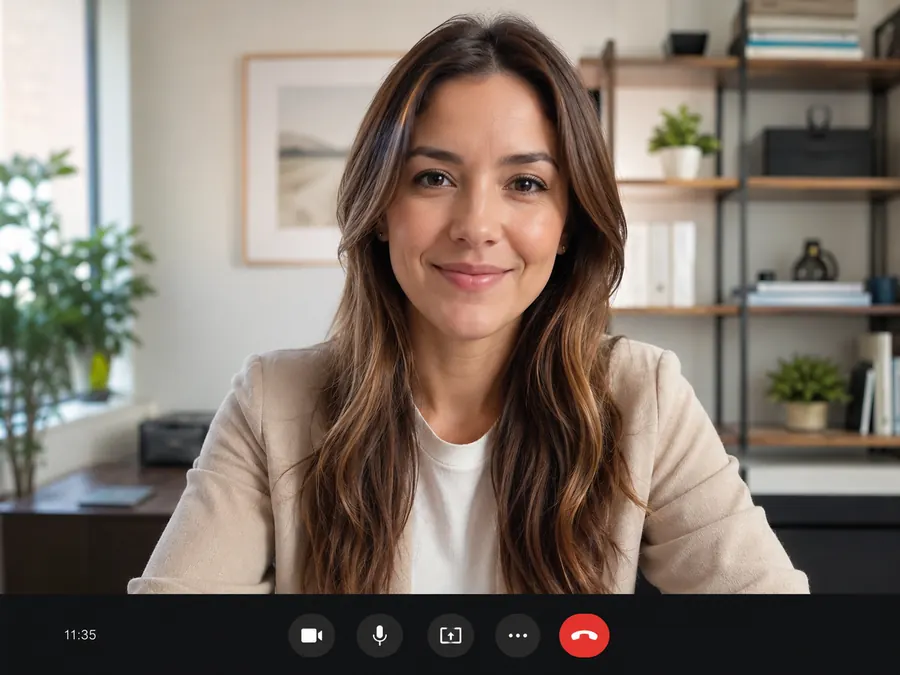
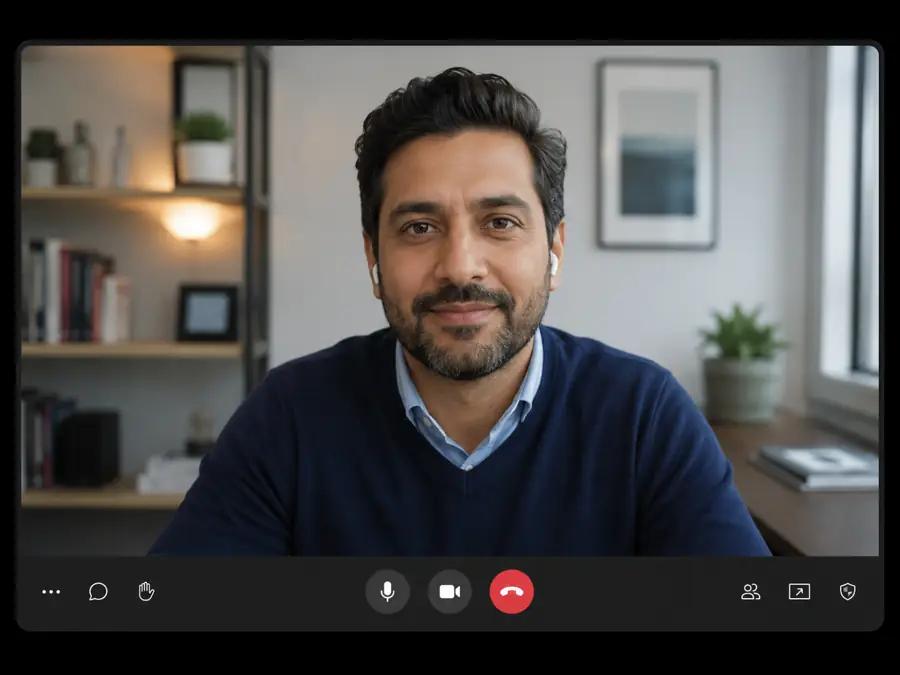
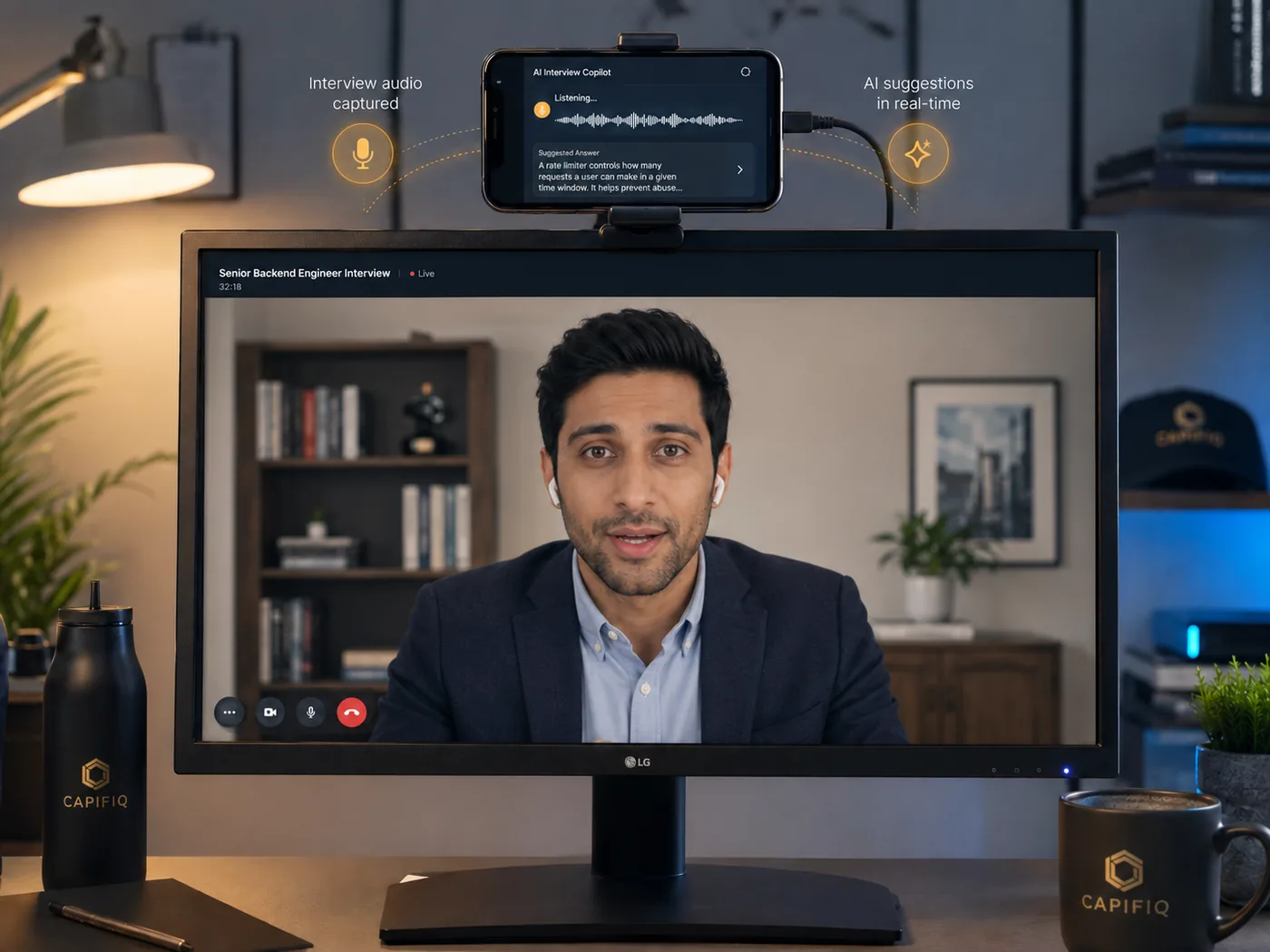
A candidate can mount a phone on the monitor bezel, let it hear the interview through its own microphone, and read generated answers while appearing to look naturally toward the webcam.
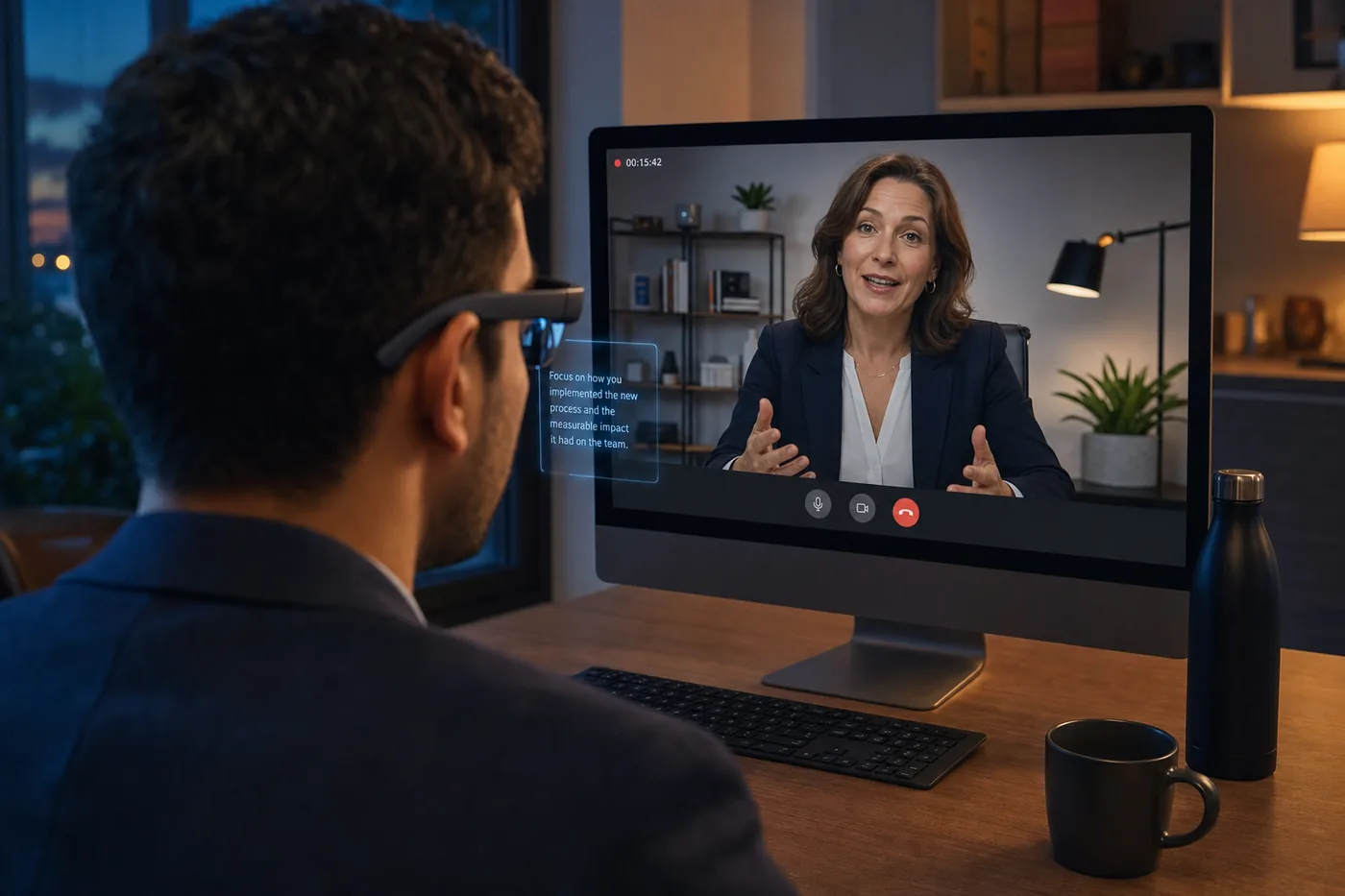
AI smart glasses can show generated answers inside the lens, in the candidate's line of sight: no screen to share, no window to hide, and nothing installed on the interview computer.
The full picture
Interview integrity has two halves, and both are needed. Capifiq surfaces covered integrity-relevant activity on the candidate's machine, and outpaces the off-device help no software can see.
Detect · on-device
Hidden AI overlays, remote control, virtual machines, virtual cameras, browser copilots, display tampering, surfaced by what they do and sealed as evidence, even when the tool is new or renamed.
How detection works →Outpace · off-device
A phone, an earpiece, an accomplice off-camera. No software can see any of it, so the Question Engine changes what they'd be helping with. Included with every account.
How deterrence works →Both run in one place: why interviews need their own client →
Most interview-integrity products either infer cheating from behavior or compare running software against a maintained list of known tools. One produces suspicion. The other only recognizes what it already knows.
Capifiq is designed to surface unauthorized assistance even when the exact tool is new, renamed, privately built, or adapted from an open-source project.
These tools look for patterns that may correlate with cheating, but the signal remains indirect.
These scanners inspect known names, signatures, hashes, or window indicators associated with cataloged cheating tools.
Behavioral tools infer. Process scanners recognize known indicators. Capifiq verifies and preserves evidence.
Products in this market differ on two independent axes: who evaluates the candidate, and where the interview actually runs. Collapsing them into one list is how a buyer ends up comparing an AI interviewer with a meeting platform. Here they are, separately.
Axis one
This is the line that matters most, and it is not the same as "is there AI in the product". Capifiq uses AI for question preparation, session integrity, captions and media authenticity, and none of it forms a view about the person.
| What differs | CapifiqHuman-led interview | AI interviewer platformsAutomated evaluation | Interview intelligence toolsScoring from the recording |
|---|---|---|---|
| Who conducts the interview | A person, liveYour interviewer runs the conversation. There is no autonomous interviewer. |
A modelCommonly asynchronous, with the candidate answering to a recording or an agent. |
A person, liveThe tool joins or ingests the recording afterwards. |
| Who evaluates answer quality | Your interviewerCapifiq does not grade answers. That judgement stays with the hiring team. |
The modelAnswer quality is scored automatically against a rubric. |
The tool, then a personAnswers are summarised or scored, and a reviewer works from that. |
| Fit score, rank or recommendation | None producedNo fit score, no ranking, no advance-or-reject recommendation exists in the product. |
The core outputA score or shortlist is the reason the product is bought. |
Commonly producedScorecards, competency ratings and comparisons across candidates. |
| Automated rejection | Nothing to reject onAn automated screen-out needs a score. Capifiq produces none. |
Configurable in some productsThresholds can gate who a recruiter ever sees. |
Depends on the ATS wiringThe score can drive downstream filtering. |
| Primary output | A session recordTimestamped integrity events and sealed evidence, reviewed by a person who did not run the interview. |
A candidate scoreA rating, band or ranked list. |
A scored transcriptHighlights, ratings and interviewer coaching. |
Axis two
Integrity is a property of the session, so it depends on who owns the session. A tool that watches a meeting it does not own can only see the layer it was given.
| What differs | CapifiqThe meeting is the product | General meeting toolsVideo conferencing | Integrity add-onsBolted onto someone else's meeting |
|---|---|---|---|
| Where the interview runs | In CapifiqScheduled and conducted here. Interviewers join from the browser; the candidate joins through the desktop client. |
In the meeting toolBuilt for meetings in general, not for interviews specifically. |
In the host toolThe add-on observes a session it does not control. |
| Device-session integrity | Verified from the candidate's clientA browser tab cannot see the desktop. The client can, for the length of the interview window only. |
Not providedReasonably so. It is not what a meeting tool is for. |
Bounded by the host appCoverage is limited to what the platform's extension surface exposes. |
| Handling help that never touches the computer | Addressed in the questionsNo software sees a phone or an earpiece. The Question Engine builds questions so that help has far less to offer. |
Out of scopeThe meeting tool has no view of the interview protocol. |
Not addressableA detection layer cannot change what is being asked. |
| Recording, transcript, shared code pad, whiteboard, integrity timeline | One session, one recordThe coding pad and whiteboard are inside the interview, so shared work is part of the same timeline. |
Recording and transcriptTechnical work usually happens in a separate editor or screen share. |
Assembled across toolsThe record is stitched from the meeting platform, the editor and the add-on. |
| Candidate rights and review workflow | Built into the productConsent before capture, adjustment requests, and a reviewer who is barred in code from being the interviewer who ran the session. |
Recording consent onlyThe rest is left to the employer's own process. |
Varies by vendorOften a policy commitment rather than an enforced workflow. |
AI analysis · live and after
Capifiq's analysis doesn't stop when the interview ends. It works in two passes: real-time during the session, and a deeper AI pass over the complete sealed record afterward, so nothing is missed in the moment and nothing is lost for review.
During the interview
As the session runs, Capifiq analyzes the interview environment and surfaces events and observations the moment they happen. The interviewer watches integrity status on a live dashboard and can act while the interview is still in progress.
After the interview
When the interview ends, Capifiq runs a thorough AI analysis across the complete sealed record: correlating the full timeline so subtle patterns that weren't obvious in the moment are surfaced in the final integrity report.
Capifiq documents what can be captured during a monitored interview, which evidence actions are controlled by the interviewer, and how long interview records are retained.
Capifiq surfaces the finding. The interviewer makes the judgement. Findings are reviewed by a qualified person and are never the sole basis for a decision.
NIST-aligned evidence handling · SOC 2 Type II audit in progress · audit-ready evidence retained on your terms · candidate rights & review
The complete platform
Directly observed technical events at the core, with media-authenticity signals labelled separately: inside the platform the interview actually runs on, connected to your ATS and calendar. One platform for the entire interview, and a record built to be reviewed rather than argued with.
Capifiq runs the interview and the record it produces. It runs the interview itself, so nothing has to be bolted on around it, and delivers deterministic detection of on-device and environment threats, with media-authenticity signals labelled separately from direct technical events; connects to every applicant tracking system and your calendar; adds optional live ID card verification; and runs both live in-interview and post-interview AI analysis across every signal collected: all preserved as one timestamped, cryptographically sealed evidence record. It is not a process-list scanner: rivals advertise a tool count because a scanner only catches names on a list: rename a binary or fork it on GitHub and they go blind. Capifiq doesn't count tools; it verifies the environment, catching unknown, renamed, forked, and private builds alike.
Direct technical events are observed and recorded; media-authenticity signals are model-derived and labelled as such: never scores, never about the person. Off-device help is outpaced by the Question Engine. Every gap, covered by one platform.
Free white paper
Fifteen pages on how live AI assistance works, why conventional proctoring misses it, and what actually protects your interviews: written for hiring leaders.